How exchange students can make a good first impression

Abraham Lincoln noted that a reputation is like fine china – once broken, it is very hard to repair.

The same is true of first impressions. Once you’ve made a bad impression on someone else, it can take a lot of time and effort to undo that damage and change the way he or she thinks about you. Make a good first impression, however, and that person will usually remember and think about you in a positive way – even if you subsequently have a few “off” days.

Why do you need to make a good first impression?

How exchange students can make a good first impression
Flickr/Quinn Dombrowski

As an exchange student, you’ll meet many new people during the course of your exchange.

You need to make a good first impression on every one of those people.

Why?

Well, for starters, you’re basically starting your life from scratch in a new country, and will have no friends to start with. People will generally only want to hang out with you if you seem like a good person to hang out with. If you come across as friendly, uncomplicated and open, you’ll attract new friends. If you come across as unpleasant, self-centred and negative, you won’t. Unless you want your friend counter to be stuck on zero for twelve months, you have to prove to others that you are worthy of their friendship.

Second, the number of people you’ll be seeing on a regular basis and who are potential friends is actually quite small – maybe in the vicinity of 50 or 60 people. You’ll see your host family or families, your class mates, other exchange students, and that’ll be about it. No work friends. Probably very few sport or co-curricular friends. Not as many friends-of-friends or extended family members as you may be used to at home. The bottom line is that your pool of potential friends is quite limited. You can’t afford to turn too many of them off by acting badly, simply because there aren’t that many of them to start with.

Third, the blunt truth is that being friends with an exchange student is harder than being friends with a normal person. People need to speak slower so that you can understand them. You’re only going to be there for a limited time. Because everything is new to you, you may need a bit of hand-holding, even in relation to simple things like buying a bus ticket. People need to be assured that the extra effort they’ll make in being your friend is worth it. That may sound mercenary, but it’s true.

General tips for making a good first impression
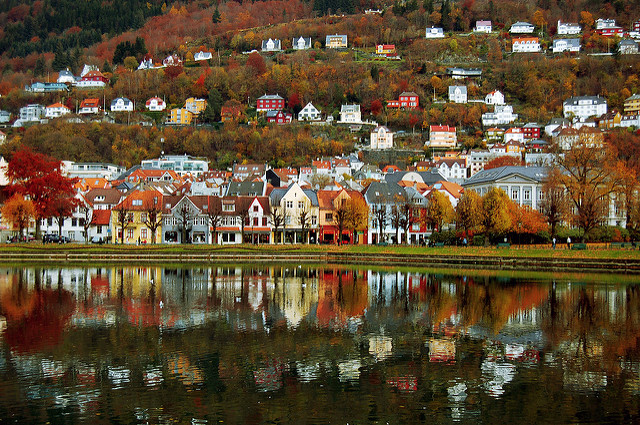
First impressions Norway
Flickr/Vidar Flak

Having gone on at length about how your exchange is doomed if you don’t make a good first impression on others, it’s my sad duty to tell you that most people aren’t very good at it.

I sure wasn’t before I went on exchange.

However, here’s the good news:

Making a positive first impression on others is actually a skill that you can practise and become proficient at. You just need to understand a few basics.

Greetings

People tend to read a lot into the way you greet them. They can take offence at things that seem trivial if you aren’t aware of them, like the firmness of your handshake.

So, play it safe, and do all of the following when greeting someone for the first time:

  • Be sure to smile. If you don’t feel like smiling – for example, because you’re stepping off a 24-hour flight from Sydney – fake it till you make it, and smile anyway.
  • Shake hands if appropriate and make eye contact while doing so.
  • Be sure to introduce yourself, ask the person you are meeting his or her name, and tell that person that you are pleased to meet him or her.
  • If the person you are meeting for the first time is older than you, consider addressing him or her with the title “Mr” or “Mrs” or their foreign-language equivalents.
  • If you are on exchange to a country in which a foreign language with a formal and informal voice is spoken, don’t forget to use the formal voice when addressing that person – for example, vous in French or Sie in German.

Names

Something else to remember is that it is generally considered polite to address someone using their name, including people you’ve just met.

In certain countries, including Switzerland, it is considered rude to greet your acquaintances without using their names. If you see your friend Thomas in Switzerland, you need to greet him with “Hi Thomas” instead of just saying “Hi”.

Even if you aren’t in a host country with such a cultural rule, if you know someone’s name, including where you have just been told that name, use it when greeting him or her.

One of my colleagues at law school had a reputation for being a friendly and outgoing person. He seemed to have a prodigious ability to remember the names of people he’d met. I eventually learned that he had a notebook that he used to carry around. Every time he met someone new, he’d write down their name and a few key details, and commit those to memory.

Was that kooky?

Sure. But he kept it a secret, so no-one knew. What people did know was that he remembered the names and something about nearly every one of his 300 classmates, and was extremely likeable as a result.

If you aren’t great at remembering names, or just want to make a good impression, I recommend his kooky-but-effective notebook method.

Making conversation

Exchange students - making conversation
Flickr/Moyan Brenn

You can make a good first impression by being an easy and enjoyable person to talk to. If people like talking to you the first time, they’ll most likely want to talk to you again.

Don’t worry if you aren’t a natural conversationalist. Probably only 10% of people are. Again, the rest of us are faking it until we make it.

The truth is that making conversation is a skill that you can easily learn. There are really only four things you need to remember:

  1. People love talking about themselves. If you keep the conversation focussed on the other person, and don’t talk about yourself too much, the other person will most likely enjoy talking to you, and want to talk to you again. Keeping the conversation focused on the person you’re talking to is also very easy: just ask that person lots of questions, and show genuine interest in his or her answers. Don’t ask questions in a stalkerish, third-degree kind of way, but in a way which shows that you are interested in what the other person has to say
  2. There are some things that nearly everyone is interested in. You can default to those if you can’t think of anything else to talk about. For example, nearly everyone likes music of some kind. Nearly everyone is interested in travelling. Nearly everyone has been to the movies in the last month or so. Nearly every male has some interest in sport and cars. And so on.
  3. Steer clear of discussions about politics, religion, or money. If music, sport and travel bring people together, money, religion and (especially) politics drive people apart. Those topics polarise people and you can easily make others think you’re pushing a political or religious agenda. Avoid them if you can.
  4. Keep things light-hearted and positive. Don’t dwell on the negatives of your host country, or make unfavourable comparisons between your host country and your home nation.

As an exchange student, you’ll find that you develop a little “getting to know you” conversation routine because of the sheer number of new people you’ll be meeting all the time. As an exchange student, my unwritten routine of questions when meeting a new person looked something like this:

  • I would introduce myself and find out the other person’s name
  • The other person would usually ask where I was from, and I would tell them I was Australian
  • I would ask whether they had been to Australia, or travelled abroad, themselves. If we had both travelled to the same country, I would ask where and ask how the person had liked certain places or experiences.
  • I would ask where the other person was from – ie, whether they were born in the area or whether they had moved there from elsewhere in the host country.
  • I would ask what the other person did in his or her free time.
  • I would ask the other person whether he or she followed any sports.
  • I would ask the other person what sort of music he or she liked.

Your routine, when you develop it, will probably look quite similar.

Dress – the “adding one level of neatness” rule

People you meet for the first time whilst on exchange will think better of you if you’re dressed well and your appearance is neat and tidy.

A small hack to make a good first impression based upon your appearance is to dress one level “neater” than everyone around you. For example, if people at the school you attend in your host country generally wear jeans and a t-shirt to school in summer, wear jeans and a polo. If they wear jeans and a polo, wear jeans and a button-up shirt. By only taking it up one level of neatness, you won’t look too preppy. But you will look well-dressed, and make a good impression.

There is also a range of situations in which you will need to dress more conservatively in order to make the right first impression. These are:

  • Situations where the people you’ll be meeting are mostly aged in their 50s and above
  • Any time where you are giving a speech or presentation in front of a group
  • Times when you are meeting with high-ranking or important people – for example, your school principal, senior people within your exchange organisation, your local mayor or politicians from the area in which you’re being hosted

Making a good first impression on your host family
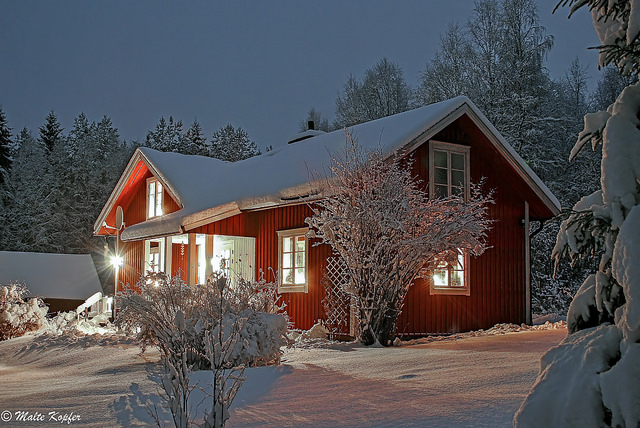
Exchange Students - Making a good impression on your host family
Flickr/Malte Kopfer

Your relationship with your host family is easily the most important relationship you’ll have as an exchange student. You need to get that relationship off to the best possible start.

Show that you’re willing and ready to fit in

You can make a good first impression with your host family by showing that you are ready to fit in as a member of the family. This means:

  • asking – preferably on day one – about your host family’s household routine. What time do they get up in the morning? What time do they go to bed at night? What are their arrangements for laundry, cleaning, ironing, and so on? Is there anything you can do to help around the home? Once you know the answer to these questions, try to fit in with that routine like any other member of the family.
  • finding out about your host family’s rules regarding lights-out time, the time they expect you home at night, internet use, use of their land-line phone, alcohol consumption, and whether you can have friends over to visit, and then abiding by those rules, from day one. These are some of the top “friction” points between host families and exchange students, and you need to learn your host family’s rules, and stick with them, from day one.
  • accepting invitations from your host family to go out, participating in family activities, and generally going along with the family’s agenda and movements. The deal with being an exchange student is that you will integrate into your family’s existing routine, rather than your family adjusting that routine to suit you.
  • limiting the amount of time you spend by yourself in your bedroom, and maximising the time you spend around your host family. Even sitting watching TV or reading a book in the family room while the family circulates around is a better way to build a relationship with them than holing yourself up in your room, alone.

Show that you’re serious about your exchange

Your host family will have an emotional stake in the success of your exchange. If you do well as an exchange student, your host family will feel that they have contributed to that success. If you don’t do well as an exchange student, they will feel partly responsible for your failure.

From the outset, then, you can make a good impression on your host family by demonstrating that you know what you need to do to have a successful exchange, and are prepared to do it. You can do this by:

  • Taking school seriously – including by attending full time, doing your homework, and otherwise participating in school life enthusiastically
  • Diligently studying the language of your host country, if you are in a country where you’re required to learn a new language
  • Showing from the outset that you are willing to adapt the culture and customs of your host country, and
  • Meeting any requirements of your exchange program

For more information on what will be expected of you as an exchange student, see my article on what you can expect as an exchange student.

Show that you are interested in building a relationship with your host family

Most of all, the members of your host family will be looking for early confirmation that you are prepared to establish a meaningful relationship with them.

Your host family is opening its house to you and wants to welcome you as a member of the family. Your host parents have volunteered to be your guardians and closest adults for the duration of your exchange; your host siblings are prepared to be your de facto brothers or sisters. They have all probably been looking forward to your arrival.

From discussions with former host families, I know that it causes a great deal of pain and disappointment to a host family when an exchange student arrives and seems uninterested in spending time with them.

Building a meaningful, deep relationship with your host family is straightforward. Mostly, it’s a simple matter of spending time with them. That means accepting their invitations, spending plenty of time in the common areas of their house, chatting to them about their day at mealtimes, helping your host siblings with their homework if required, and helping your host parents with minor chores if asked.

Things that will get in the way of you establishing a good relationship with your host family include:

  • you spending too much time on the internet, social media or being preoccupied with your smartphone
  • you spending a lot of time on the phone or otherwise communicating with your family and friends at home
  • you spending a lot of time alone in your bedroom – especially with the door closed
  • you spending the majority of your time with other exchange students, and
  • you not learning the language of your host country

Take note of these “do”s and “don’t”s, and be sure to work on your relationship with your host family, from the outset.

Making a good first impression on your classmates

Exchange students - making a good first impression - school mates
Flickr/Denisbin

It’s also important to make a good first impression on your school classmates. After all, school is where you’ll be spending the majority of your time each day. You will make a good impression at school if your attitude, demeanour and behaviour make clear to people that:

  1. You want to meet, and make friends with, as many people as possible, and
  2. You want to fit in and be a normal member of your class and school communities

Meeting and befriending people at school

There will be multiple opportunities for you to meet your schoolmates during your first few weeks at school. You can get to know them whilst travelling to school if you are walking, riding a bike, or using public transport. You can get to know them in class and between classes. You can get to know them through school-based sport and co-curricular activities.

Make a big effort to go above and beyond these obvious opportunities. Once you make friends with someone, try to get to know that person’s friends, too. If you can do extra sport at lunchtime, or extra classes which will help you to mix with different people from your classmates, do that, too. Make it your mission to meet, and become friendly with, as many people as possible.

If you get invited to spend time with people – at lunchtime or after hours – accept the invitation. Be sure to smile and ask plenty of questions when you’re with those people, and thank them sincerely for inviting you. If your behaviour turns people off, you are unlikely to get a second invitation. Remember what Abe Lincoln said. You’ll only get one chance to make a good impression on these folks, so make it count.

Fitting in with your classmates

When you first arrive at your new school, you may be a bit of a celebrity.

As well as being a new student – which in itself usually makes people curious – the fact that you come from another country will give you added novelty value. People will most likely want to ask questions about your home country, comment about your accent, and generally make a bit of a deal about having someone from overseas at school with them.

This attention can be enjoyable. However, it is superficial and won’t last.

The best thing is for you to try to blend in with your classmates as quickly as possible. You’ll earn their respect and acceptance by attending every class with them – no cutting class – sitting up, paying attention and participating in lessons as much as possible.

If there is a way you can help your class – for example, by helping them in a subject in which you have particular expertise – you should do it.

Try to get a feel for the culture of your class, find out what your classmates are interested in, and generally get to know how everyone else ticks. Be chatty, positive and open.

The message you want to be sending to your school mates at all times is that you like them and that you want to be a part of the school, rather than someone who stands out.

Other exchange students

Making a good first impression - other exchange students
Flickr/Agus Sutanto

Finally, you should try to make as good a first impression as possible on other exchange students.

It’s in your interests to have as many friends as possible amongst your fellow exchange students. The friendships you make with them are likely to be one of the most enduring legacies of your exchange. Also, the reputation you earn amongst your exchange student peers will attach to your home country. You need to be a good ambassador for your home country whenever possible.

Be a good friend

Students in US Army schools have traditionally adopted the unofficial motto “cooperate and graduate”. Those students know that the more they help and support one another throughout the rigours of army training, the more likely they are to graduate successfully.

The golden rule amongst exchange students should be “help each other and thrive”. The truth is that being an exchange student can be very hard at times. Like those army officers in the US, the more exchange students help and support one another, the better their chances are of having a successful exchange.

Certainly, if there’s one thing you should do in respect of your fellow exchange students, it’s to be as helpful as possible. When it comes to new exchange students, share as much of your accumulated wisdom as possible. Help them with language issues, reassure them about any cultural or language problems, listen patiently to their gripes about school and host family – the usual things which are hardest to adjust to – and forgive any naïve behaviour. Encourage them to call you if they need a hand or someone to chat to. Call them for a talk every now and then, to make sure they are settling in OK.

The same goes for your more experienced fellow exchange students. Even exchange students who’ve overcome teething problems and know their way around appreciate having a confidante and friend who is experiencing the same things as them. Show that you’re willing to be such a friend.

Good luck,

Matt



Student Exchange Programs – How to select the right one for you

There are dozens of exchange programs. In fact, there are probably hundreds if you count small exchange arrangements between schools, partner cities arrangements, and so forth. I have listed a number of the major exchange programs on the ‘Resources’ page.

Choosing the right exchange program can make a huge difference to the success or otherwise of your student exchange. Yet, the process which most students and their families employ to select a program seems incredibly casual. I surmise that most people just find a program that looks OK and allows them to exchange to the country they are interested in, and apply to that program. They seem to do very little research or critical thinking prior to applying. In fact, they probably put more critical thought into their choice of sneakers or cell phone.

Don’t be like them. Increase your chances of having a great exchange by putting some rigour into the process of selecting an exchange program.

Do-it-yourself assessment tool

The aim of this article is to help you select the best available exchange program.  I only have direct experience with one exchange student program – Rotary Youth Exchange. I thought that it was a well-run and organized program. However, there may well be other programs which are better organized, or which better suit your purposes.

An in-depth examination of all available exchange programs is beyond the scope of this website. I also do not intend to make a recommendation in this article about which program is the “best”. Instead, I will help you make your own assessment of which program is right for your circumstances. I will give you five rules to apply when assessing exchange programs. You should only select a program which meets all five of those rules.

Rule 1: The exchange program must have one or more mentors or counsellors to help exchange students having difficulties

Exchange student Singapore
Flickr / Les Haines

Things can and do go wrong during student exchanges. You need to choose an exchange organisation which gives you a safety net. In fact, ideally you’ll have several safety nets. The more the better.

Usually, when an exchange student encounters a problem, he gets help from his host family in the first instance. That works OK, until the exchange student’s host family is the problem. Thankfully, I never had issues with any of my host families. But a number of my exchange colleagues had problems with theirs. Some of these problems were mildly humorous, like only being permitted to shower at home twice per week. Some were potentially dangerous, like physical abuse of a host sibling.

Rotary had a mechanism in place for dealing with such issues. It appointed two “counsellors” for each student – one in the host Rotary club, and one in the sponsoring Rotary club back home. This meant that if a student was having problems with his host family, he could approach either Rotary counsellor for help. If the counsellor in the host Rotary club wasn’t helpful, or felt conflicted because he was friends with the host family in question, the student could contact the counsellor in his sponsoring Rotary club. The sponsor club counsellor would then sort things out. I thought it was a smart system.

I’m aware of other exchange organizations which have a co-ordinator or mentor for all students in a particular city or district. Students who have problems that their host families can’t solve can turn to the co-ordinator or mentor person for assistance. That also seems sensible, although I wonder what happens if the co-ordinator hears about the problem and sides with the host family, whom the co-ordinator most likely will have recruited. A two safety-net system like Rotary’s is preferable.

Rule 2: The exchange program must be large and well-established

New York
Flickr / Andrea

Size matters when it comes to exchange programs. The larger exchange organisations such as Rotary, AFS and YFU have been operating for decades and have probably each sent hundreds of thousands of students on exchange. All of that experience is reflected in their policies and administration, which are well-settled and robust. They are large enough to be able to employ full-time staff who can devote their time to looking after students and running their programs properly. If a student has a problem with his or her host family and needs to change – which happens relatively often – a large program will have the resources and capabilities to find a new host family quickly.

Smaller exchange programs – such as an arrangement between two schools in different countries – are unlikely to have the same amount of rigour. They largely rely upon volunteer labour and may struggle to find you a new family if things with your original host family go wrong.

Unless you find a small exchange program or arrangement which seems exceptionally well run, stick with one of the larger, established programs.

Rule 3: The exchange program must rigorously screen all host families and program administrators

Flickr / Arnaud DG
Flickr / Arnaud DG

Before you apply to any youth exchange organisation, be sure to check out its policies in relation to screening host families and program administrators.

At a minimum, the exchange organisation you choose should undertake police background checks on your host family or host families. It should also undertake such checks on any of its employees or officers who will have supervisory responsibilities towards you. Youth exchange students in a foreign country are young, vulnerable and very attractive targets for fraudsters, paedophiles, and others wanting to exploit them.

The exchange organisation should also interview and screen host families to ensure that they will offer you a good, stable home life. A girl from my high school went on exchange when she was 16 years old and was placed in a family where the father was a movie director. Anecdotally, there were always assorted movie and television stars, musicians and other celebrities hanging around the host family’s house. While she was on exchange, the girl ended up getting engaged to a hip-hop star who paid for her to have breast augmentation surgery. That was an unfortunate example of a young person being placed with a host family which couldn’t offer her a suitable home environment.

Rule 4: The exchange program must have a local office or representative

Make sure that the exchange program you choose has a local office or contact person in your home country.

It sounds like a small thing. However, virtually everything about your exchange program will be easier if you and your parents can deal with a person locally, instead of having to deal with people overseas. Applying for the program will be easier. Sorting out problems with your host families will be easier. Things like insurance claims will be far easier. There will be no language barrier and no time zone differences to worry about. If anything comes up during your exchange, your parents can just call the local person and let him sort things out with his overseas counterpart.

Rule 5: The exchange organisation must give you opportunities to socialise with other exchange students

Finland
Flickr / Marjaana Pato

On a lighter note, I recommend seeking out an exchange program which will give you opportunities to meet, and socialise with, other inbound exchange students.

Most exchange organisations really push the need for exchange students to spend the majority of their time associating with their host families, school mates and other natives of their host countries. I agree with that policy.

However, good exchange organisations also recognise that relationships between exchange students can be hugely beneficial, and encourage those relationships. During my exchange year in Switzerland, Rotary Switzerland did this by organising a two-week long European tour for all inbound exchange students, as well as weekend get-togethers every two months. Meeting other exchange students through these events helped me in the following ways:

  • Coming from the Southern Hemisphere, my exchange year started in January. There were a number of Northern Hemisphere students who had started their exchange years in the previous August. Those more experienced exchange students gave me a lot of good advice about what they had learned and really helped me find my feet in the early days of my exchange.
  • The other exchange students could relate to issues and frustrations I was experiencing with school, Swiss culture, language, homesickness, and were happy to discuss those.
  • I was able to meet and befriend the host families of several other exchange students, broadening my experience of Swiss life.
  • I had a circle of friends to spend time with on weekends when my host families were busy.
  • I enjoyed being able to travel with others who were experiencing things for the first time at the same time I was.
  • I was able to learn something about the cultures of the countries from which those other exchange students came.

I am still close friends with roughly half a dozen people I first met when we were exchange students in Switzerland. Although we have moved on and developed other common interests since then, the help, friendship and support we gave each other all those years ago is still the glue which binds our friendships together now.

Don’t miss out on the many benefits of spending time with other exchange students. Be sure to apply to an exchange program which will enable you to meet, and travel with, other exchange students.

Good luck,

Matt


How to choose a host country

If you’re interested in being an exchange student, you probably already have an idea about where you’d like to go on exchange.

For example, you may be interested in going to Italy because you have Italian ancestry.

Or, you may be interested in exchanging to South America because you love soccer.

I was into heavy metal music as a teenager. I considered undertaking an exchange year in the USA, which is the home of that kind of music.

Choose a host country with your heart AND your head

By all means, follow your interests when choosing a host country.

But don’t forget to ask the additional, extremely important question of whether the country in question will be a good country for you to live in.

Political correctness warning

Make no mistake, there are good and bad countries to live in.

Is it politically incorrect to name the bad ones?

Yes.

Am I going to name them here?

You bet. Here’s why:

I am trying to help readers of this website, not impress them with how open-minded and tolerant I am. I would much rather tell the truth and appear intolerant than put the safety and health of my readers at risk.

What makes a good host country?

Imagine a target or bullseye with three concentric circles.

The target represents an ideal exchange destination, with three objective criteria that need to be fulfilled.

You need to find an exchange destination which meets all three of the criteria.

Exchange student in Florence
Flickr/Artur Staszewski

1. The country must be safe

The innermost circle on the target, and the most important consideration, is your personal safety.

If you want to avoid getting killed or seriously injured, take heed of the following tip:

You must only consider undertaking a student exchange in countries where you are likely to be safe, and the possibility of you being hurt or killed is low.

Do not consider applying to countries where there is a high chance of injury or death.

Does that sound melodramatic?

Sure. But here’s the truth:

The majority of countries on earth are not particularly safe places.

For example, people in many countries violently dislike anglo-saxons in general, and Americans in particular.

In other countries, people target Jews and Christians and places where they congregate.

There are also many countries which are not safe because:

  • there is either no government, or the government in place is ineffective or corrupt;
  • there is a civil war taking place or an insurgency;
  • there is social unrest or other factors resulting in large numbers of displaced or disaffected people living in that country; or
  • minorities are oppressed and/or discriminated against (women, gays, minority religions, certain ethnic groups).

If you want a good idea of which countries are safe for you to live in as an exchange student, the foreign ministries of Australia, the United States, Canada, the United Kingdom and New Zealand each have websites listing risks and dangers for foreigners in virtually every country on earth.

Although those websites are tailored for tourists and other visitors, they will also give you an idea of which countries will be safe enough for you to live in, and which countries you should avoid.

For me, the requirement to choose a safe country as an exchange destination rules out virtually the entire Middle East, virtually the whole of Africa (especially the Maghreb countries of northern Africa), Afghanistan, Pakistan, Bangladesh, the Philippines outside Manila, Papua New Guinea, the Solomon Islands, Mexico and Venezuela.

Lofoten, Norway
Flickr/Jakob Nilsson-Ehle

2. The country must have a first-world health system

After ensuring your personal safety, your second priority is your health.

Accordingly, the second concentric ring outwards from the centre of your hypothetical target is healthcare.

The chances of you falling seriously ill during your exchange may be low.

However, you need to ensure that if you do get sick, you will receive proper, safe, first-world medical care.

You must choose a host country with a Western-standard medical system. This means competent doctors, sanitary and well-equipped hospitals, and access to high-quality drugs.

The experience of one of my outbound exchange cohort illustrates this starkly. My colleague fell gravely ill soon after she arrived in her Scandinavian host country. She was unable to fly home, and had to undergo open-heart surgery in that country. Thankfully, the host country in question was an affluent nation with excellent health care. The surgery was a success and she was able to return to full health and complete her exchange year.

The availability of a first-world health system probably played a big role in saving my friend’s life. We tend to take such medical care for granted. The reality is that people die of relatively mild ailments like asthma even in relatively affluent countries such as those in Eastern Europe.

If you suffer from a pre-existing condition such as epilepsy or severe asthma or haemophilia, it is even more important that you choose a host country with an excellent health system. Failure to do so could literally cost you your life.

Which countries which weren’t eliminated in Step 1 have inadequate health systems? Those in Eastern Europe, many countries in South-East Asia, many parts of South and Central America, Pacific Island nations, India and China.

3. The country should not be experiencing mass social unrest, or have a high degree of inequality

The third circle in your imaginary target is stability. Specifically, you need to avoid choosing a host country in which there is a large gap between rich and poor, or a large group of disempowered or marginalised citizens, or an oppressive political or economic system.

In every such country, there is a large group of disaffected people, which typically resents the elite. As an exchange student, your host family and school friends will almost certainly come from the elite and you will form a part of that elite. As such, you will become a target for the disaffected elements of society.

Consequences of living in such a society include:

  • increased likelihood of being robbed or being a victim of other petty crime
  • “no go” zones in large cities which are unsafe for foreigners or members of the elite.
  • witnessing, or being an unintended victim of, police brutality

Which remaining countries suffer from this problem? Traditionally, countries such as Brazil, most other South American countries, the Philippines and South Africa.

Other pertinent factors

Other things to consider when considering which host country to choose include the following:

  • generally, the more affluent your host country is, the more physically comfortable your stay will be
  • people will usually be more welcoming towards you in countries which traditionally have welcomed immigrants (such as Australia, New Zealand and the United States) than in non-“immigration” countries
  • generally, the higher a country’s rank on the UN’s Human Development Index, the better it will be as a host country

Can’t choose your host city

Also, note that while you can choose which country you’d like to exchange to, you will usually not be able to choose exactly where in that country you will live. When you choose a country to be hosted in, you need to be prepared to be placed anywhere in that country.

In other words, don’t apply to go on exchange to the USA because you are interested in living in New York City. There’s a good chance you’ll actually end up in Sticksville, population 3000 and may never even have the opportunity to visit New York City.

If you are interested in living in a particular city for a while, a university exchange would be a better way to do it.

What about learning a foreign language?

Should the possibility of learning a foreign language sway your decision? In other words, if you have an equal degree of interest in exchanging to a country where people speak your mother tongue and one where they speak a foreign language, do the benefits of learning a foreign language mean that you should choose the country where you’ll learn a foreign language?

In such a situation, unless the foreign language in question is English, the answer almost certainly is no.

Learning a foreign language is extremely difficult, and the benefits to your career are overrated and extremely limited. Specifically:

  • there is a very narrow range of jobs in which a foreign language will be useful. The most common such job – translation – is unspeakably tedious, and
  • no matter how well you learn a foreign language, the ubiquity of English means that there will always be thousands of native speakers of that foreign language whose skill at speaking English far exceeds your skill at speaking their mother tongue.

I spent many years and countless hours learning German. I don’t regret any of that time. However, I have never used the German I learned professionally. It has helped me to stay in touch with my host families and when travelling, but otherwise has not been particularly beneficial.

Mt Fuji
Flickr/Skyseeker

The best host countries are…

Taking all of the above into account, which potential host countries appear to be the best ones to live in?

In order of alphabet, not merit, they are as follows:

  • Australia
  • Canada
  • Chile
  • Denmark
  • Finland
  • Germany
  • Ireland
  • Italy
  • Japan
  • New Zealand
  • Norway
  • Singapore
  • Spain
  • Switzerland
  • Uruguay
  • United States
  • United Kingdom

That list is quite limited. Notable omissions include the following:

  • France and Belgium – at the time of writing (July 2016), these countries have suffered from a string of terrorist attacks. I don’t recommend them because they currently violate my safety rule.
  • Germany and Sweden – because of recent demographic changes and associated events to date, I don’t recommend these because they have the potential to become like France and Belgium.

You’ll also note that the countries I’ve recommended above are ones that nearly every exchange program offers exchanges to. That’s not a coincidence. Major exchange organisations such as Rotary and AFS have decades of experience in sending students overseas, and know which countries are the best ones for students to visit. They are also acutely aware of risk and won’t send students to countries in which their health or safety will be jeopardised.

Another useful proxy for how good a country will be as a host country is its placement on the United Nations’ Human Development Index. Generally speaking, the higher a country is ranked on that index, the better it will be as a place to go on exchange.

Whatever choice you make regarding your future host country, please ensure that it’s a safe and well-researched one.

Good luck,

Matt

What to expect as a foreign exchange student

Many websites which purport to give advice to exchange students will tell you that everyone should become an exchange student.

That’s nuts.

Definitely not for everyone

This is the correct formulation:

Everyone should probably think about becoming an exchange student.

But they should only become an exchange student once they’ve informed themselves about what exchange students do, and the pluses and minuses of becoming an exchange student, and made an informed decision based upon that information.

One of the aims of this website is to give you such information, to help you figure out whether or not a student exchange is something you’d like to do.

In order to figure that out, you need to consider two questions:

  • What it is that exchange students actually do?
  • Do you want to spend six months or a year or another period of time doing those things?

The aim of this page is to answer the first of those questions.

School

Flickr/Lead Beyond
Flickr/Lead Beyond

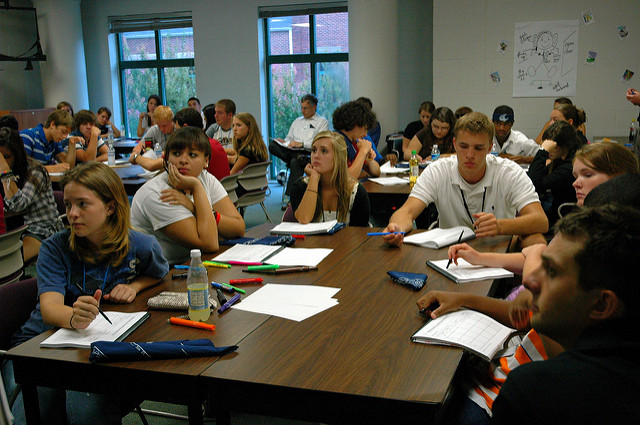
If you do decide to become an exchange student, you’ll spend the majority of your time attending school.

Of course, the school will be in another country, which will add novelty value and make it interesting, at first. After a while, though, your day-to-day routine will probably be very similar to the one you have (or had) as a school student in your home country.

The school that hosts you is unlikely to have high academic expectations of you. For example, unless you have arranged for the grades you earn whilst on exchange to count towards your grades at home, you probably won’t be required to sit exams or submit assignments along with the rest of the class.

However, the school (and your host family and exchange organisation) will expect you to show up to school, pay attention and take notes in class, and not disrupt your classmates. If you cut class regularly, your school and possibly your exchange organisation will ask you to improve your attendance, or leave.

If you don’t want to prolong your time in school, or can’t imagine yourself spending a whole year attending school rather than travelling or earning money or socialising, a student exchange is not for you.

Language learning

Flickr/Jennifer Woodard Maderazo

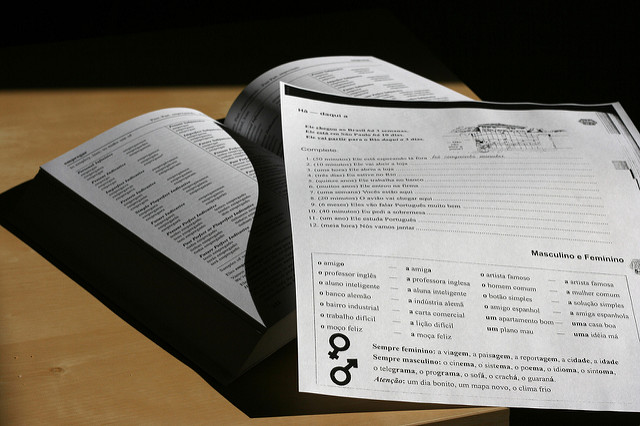
In addition to attending school, most exchange students have to spend a large amount of time learning a foreign language.

Learning a foreign language is far harder than most people imagine. True, you will learn much vocabulary and many idioms by osmosis because you are in a country where you are surrounded by people who speak the language. However, you will still need to spend many hours on your own rote learning vocabulary and grammar, and doing grammar exercises.

Your host family, school classmates and exchange organisation will take an interest in how your language skills are developing. To a degree, they will judge the success or otherwise of your youth exchange on how well you learn the language of your host country.

In other words, if you don’t learn their language well, they may think that your exchange has not been a good one. That may be an unfair assessment, but c’est la vie.

Don’t become an exchange student in a country where you’ll need to learn a foreign language if you aren’t prepared to work hard at learning that language.

Assimilation

One of the big aims of the student exchange movement is for exchange students to assimilate into the cultures of their respective host countries.

If you decide to go on exchange, your exchange organisation and host family will expect you to fit in with the routine and lifestyle of your host family. That means eating what they eat, keeping the same hours as them, respecting their belongings, adapting to their household rules and routines, respecting your host parents in the same way you respect your biological parents – if not more so – and making an effort to get along with your host siblings.

Outside the home, you will have to respect the laws of your host country, respect the rules of your school, and generally be a good citizen who keeps a low profile.

The flip side of all of this is that you will be expected to leave behind, or stop doing, some things that you do in your home country. Your parents at home might have no problem with you staying out until all hours, or staying up late on social media, or talking for hours on the phone, but your host family’s rules might not permit any of those activities. Likewise, you may participate in certain pastimes or hobbies at home that may be impractical for you to continue while you’re an exchange student. Fans of horse riding and playing the bagpipes, take note. You will have to find new pastimes in your host country to fill the void.

If you can’t imagine changing your lifestyle or habits, then a student exchange is definitely not for you.

Free time

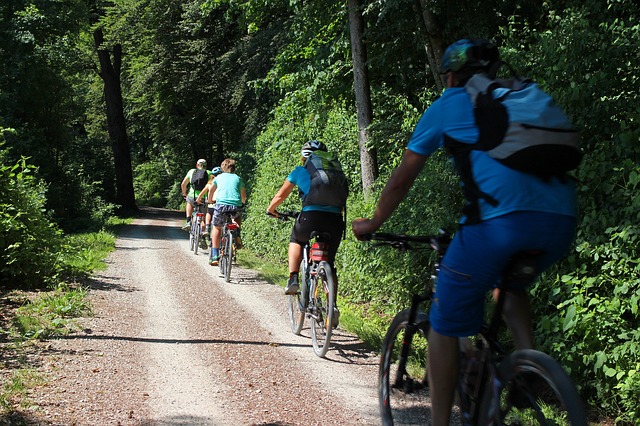
New cyclists

Exchange students spend the majority of their evenings, weekends, and other free time with their host families.

Most host families will encourage exchange students in their care to socialise with people from their schools, other exchange students, and family friends. However, host families and exchange organisations also have a clear expectation that exchange students will spend a good deal of their free time at home with their host families rather than outside the home. They will certainly discourage students from treating the house of their host families as a hotel – as places for sleeping and getting free food in between socialising and partying.

If you want to spend a year or six months going out and meeting people and not spending any time at home in a family environment, a student exchange is not for you.

Travel

Being a foreign exchange student is not the same as being a tourist.

In fact, some exchange organisations or host families may prevent you from undertaking any independent travel. They may only permit you to travel in the company of your host family, or to visit people known by your host family, or as part of trips organised by your exchange organisation.

Note that, if you do become an exchange student, you will almost certainly have opportunities to travel. During my exchange year, I went on the following trips:

  • A five-day skiing holiday with my first host family in the Swiss Alps.
  • A weekend in Basel (city in Northern Switzerland), staying with another exchange student and her family.
  • A five-day trip to Paris to visit my sister, who was also on exchange at the time.
  • Another skiing holiday with my first host family.
  • A two week long European tour organised by Rotary Switzerland.
  • A weekend in French-speaking Switzerland with a family from my Rotary host club.
  • A two-week visit to a small town in Bavaria, Germany, staying with Rotarians from the partner club of my Swiss host club.
  • A weekend in Zermatt hiking in the hills surrounding the Matterhorn, with a couple from my Rotary host club.
  • A week in Berlin with my third host family.
  • A skiing holiday in the central Swiss alps with my final host family.
  • Throughout the year, weekend trips to Geneva, Liechtenstein, Bern and other cities in Switzerland, organised by former Rotary exchange students, culminating in a final trip to Zermatt, where we snowboarded at the foot of the Matterhorn.

You get the idea. I did plenty of travelling. You will likely have similar opportunities, should you choose to go on exchange.

Note, however, that the travel will not be wholly on your terms and will rarely be unaccompanied. There almost certainly won’t be any month-long, solo backpacking trips around Europe. If you are interested in more independent travel, a student exchange is not for you. You would be far better off just taking a long holiday, or undertaking a university exchange later on.

Work

I’m not aware of any foreign exchange student who sought and obtained paid employment whilst on exchange.

For starters, the types of visas given to high school exchange students usually don’t allow the visa holder to seek paid employment. Even if you were able to get a working visa – which is surprisingly difficult in many countries – your exchange organisation may not allow you to work whilst you are on exchange.

If you want to work overseas, a student exchange is not the right way to do it. You need to consider undertaking a gap year or working holiday.

Drinking, driving, dating, drugs

If you decide to go on exchange, your student exchange organisation might prohibit you from drinking, dating, and certain other activities. The prohibited activities may include activities which you partake in at home, or which you feel you are entitled to partake in because of your age or because other people around you are doing them.

Rotary is mildly famous for prohibiting Rotary exchange students from drinking, driving, dating or taking drugs – the so-called “four ‘D’s”. No doubt other student exchange organisations have similar rules which they expect participating exchange students to abide by.

With the exception of the “no drugs” rule, most of these rules are a bit flexible. For example, nearly all exchange students get briefly romantically attached to someone while they’re on exchange. Such relationships are usually OK provided they don’t get too intense or too physical.

Exchange organisations and host families usually also tolerate a low level of drinking alcohol, particularly in countries like Belgium, Germany and France, where minimum ages for alcohol consumption are either low or routinely ignored.

Most exchange students will also operate a vehicle at least once or twice while they are on exchange, usually in the course of helping out their host families.

In a nutshell:

  • Going to the movies or hanging out at school with a girlfriend while you’re on exchange is usually OK. Doing things that could result in her getting pregnant is definitely not OK.
  • Having a beer at home with your host brother whilst watching a soccer game on TV is OK. Getting drunk and passing out in the city and missing the last train home is not OK.
  • Reversing your host parents’ car out of the driveway so that your host father can get the other car out of the garage and park it on the street is usually OK. Cruising around town in your host parents’ car without them being in it is definitely not OK.

Of course, where the rules are not flexible is where the conduct in question is illegal in your host country. For example, the drinking age in most of the United States is 21 years old – beyond the age at which you can be a high-school exchange student. Exchange organisations usually also have a zero-tolerance policy for unlicensed and uninsured driving, sex with minors or non-consensual sex, drug trafficking, and drug consumption where it is illegal. Any such conduct will lead to the student being sent home at best, or reported to the police at worst.

If you want to spend your time drinking and getting high, getting intimate with other people and driving around, a student exchange is not for you. A university exchange in a few years’ time will give you more freedom to do such things.

Not just negatives

You may conclude from the paragraphs above that there are only negative things about being a foreign exchange student.

I hasten to add that there are many benefits to going on exchange, as well. From my perspective, the benefits far outweigh the limitations on freedom and other negative aspects outlined above. I am merely trying to give you an accurate picture of what being an exchange student is like, so that your decision about whether to undertake an exchange is an informed one. The issues outlined above seem to be the ones which cause exchange students (and their host families) the greatest trouble.

Typical foreign exchange student routine

Exchange Student Tips

So, what does a typical day in the life of an exchange student look like? Mine used to look something like this:

School day routine

6.00AM: Wake up, shower and dress for school, eat breakfast.

6.45AM: Leave home on bike for 10-minute ride to train station.

7.00AM: Board train for 45-minute train journey into town. Most other school students on the train spent the time studying. I spent the time cramming German grammar or trying to read German books (impossible and very slow at first, easier and easier as the year went on).

7.45AM: Arrive at train station closest to school. Walk to bus stop and board bus for 10-minute ride to school.

8.35AM: First lesson of the day started.

11.35AM: 90-minute lunch break started (note that many schools in Europe have a long lunch break to allow students to travel home and eat lunch with their parents).

1.05PM: Afternoon lessons began.

4.35PM: End of school day. Board bus for trip to train station.

5.00PM: Train home. Again, most students would spend the train trip studying, in order to get a head start on their homework.

6.00PM: Arrive home. Do homework, study German or read newspaper until dinner time.

6.30PM: Usual dinner time.

7.30PM: Social time with host family, usually spent watching TV, lingering over dinner and chatting, or (in summer time) doing something outside like playing table tennis.

9.00PM: Say good night to host family, brush teeth, prepare for bed.

9.30PM: Lights out.

Weekend routine

Friday night: After dinner, visit pub or café with host sibling or other exchange students.

Saturday morning: Sleep in (a necessity after five 6 AM wakeups in a row).

Saturday afternoon: Family lunch, followed by some activity with members of host family (typically, sport, shopping, or helping with chores) or free time.

Saturday night: After dinner with host family, pub or café visit with similar-aged host sibling or other exchange students.

Sunday morning: Sleep in, followed by an hour of chatting to parents at home (after getting host family’s permission)

Sunday afternoon: Free time, usually a bike ride or run for me if weather permitted.

Further research

The information above is taken from my own experience and the experience of people I’ve spoken to, including former exchange students and former host families.

I urge you to seek additional information from people at your school or living in your area who have previously been foreign exchange students. Ask them how they spent most of their time, and how they found that life as an exchange student differed from life in your home country.

Decision time

Once you have as complete a picture in your mind as possible of what a foreign exchange student does, ask yourself this question:

Given my personality, my goals in life, my work ethic and my personal strengths and weaknesses, and given what I now know about the life of an exchange student, am I prepared to live that life for six or twelve months?

It’s a very tough question. Make sure you answer it as slowly as you need to, and as honestly as you can.

Good luck,

Matt